
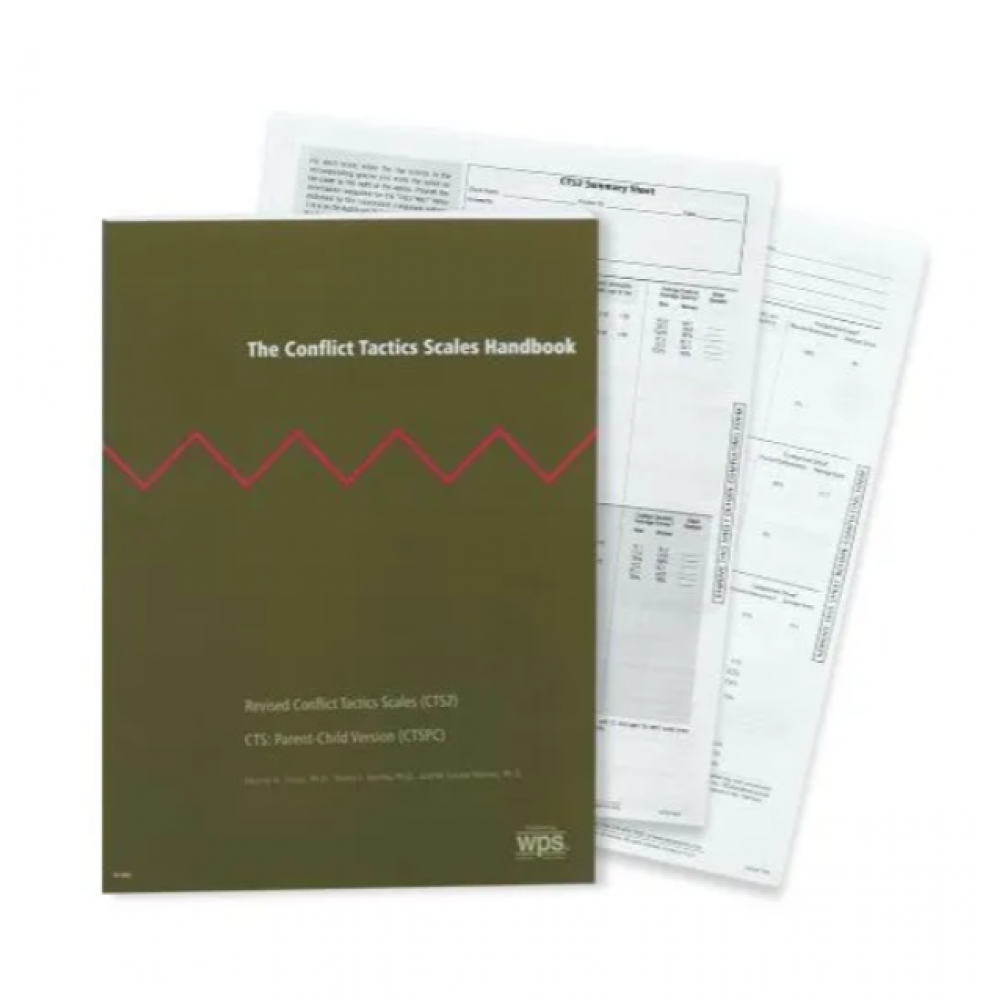
(CTS) Conflict Tactics Scales
Product Description
Benefit
A quick, practical, targeted, and widely accepted assessment of domestic violence
Format
Self-report or interview
Admin Time
10 minutes
Ages
Adults
Publish Date
2003
Qualifications
Level C required.
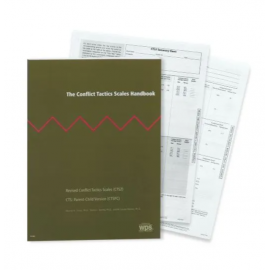
The Conflict Tactics Scales (CTS) have been used for decades to evaluate violence within families and intimate relationships. The widespread use of these scales has resulted in a proliferation of adapted forms and some confusion about their clinical and research application. This Handbook clarifies the situation by compiling and organizing—in a single source—the large body of information about the CTS. In addition, it presents two updated versions of the instrument that serve as standard forms.
The first of these is the Revised Conflict Tactics Scales (CTS2), which brings the instrument up to date by correcting the psychometric shortcomings of the original. It is the recommended form for assessing partner violence. The second form, the Conflict Tactics Scales: Parent–Child Version (CTSPC), is the recommended form for evaluating child maltreatment and parent-to-child violence.
A New Handbook With Practical Tips on Administration and Scoring
The Handbook describes the evolution of the CTS2 and CTSPC, provides examples of their use in various settings, discusses their psychometric properties, and offers practical guidance regarding administration and scoring. It also includes survey results from a number of groups for comparative purposes. Because the CTS is not a typical psychological test, the Handbook does not include broad-based standard scores or information about diagnostic interpretation.
Updated Forms That Quantify the Level of Abuse in Families
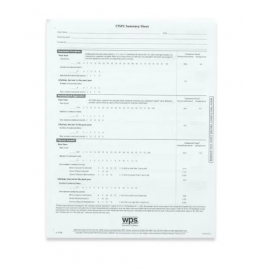
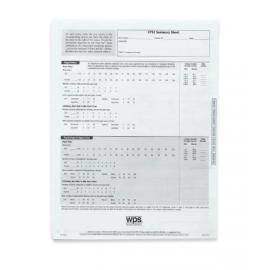
The CTS2 and CTSPC can each be completed in just 10 minutes. The CTS2 includes 78 items, half referring to the respondent’s behavior and half to the partner’s behavior. Using an 8-point scale, the respondent simply indicates how often each behavior has occurred. This produces “Self” and “Partner” scores for the following dimensions:
- Negotiation
- Psychological Aggression
- Physical Assault
- Sexual Coercion
- Injury
The test form includes space to record scores from an appropriate comparison sample selected from the Handbook.
The CTSPC is composed of 35 items, most focusing on the respondent’s behavior with his or her child, several inquiring about the parent’s own experiences as a child. These items yield scores for the following areas:
- Nonviolent Discipline
- Psychological Aggression
- Physical Assault
- Weekly Discipline
- Neglect
- Sexual Abuse
Both forms identify and quantify the level of abuse in families—specifically with regard to wife beating and child abuse. Although the scales include items that describe constructive conflict tactics and verbal aggression, their primary focus is on physically aggressive acts of intimidation and coercion.
The Standard Survey Tool for Assessing Domestic Violence
In addition to providing useful information, the CTS2 and CTSPC meet the practical needs of family therapists, social workers, and other mental health professionals. First, they take only a few minutes to administer (in a self-report or interview format) and can be easily added to standard intake procedures. Second, they target specific actions and therefore do not require that respondents recognize their own behavior as violent in order to answer questions about it. Third, they can be completed by one partner or by both partners separately.
| W-396 | CTS Kit | Email for quotation |
| W-396A | CTS2 AutoScore Form (Pack of 25) | Email for quotation |
| W-396B | CTS PC AutoScore Form (Pack of 25) | Email for quotation |
| W-396C | CTS Handbook | Email for quotation |
When you order from google.com, you will receive a confirmation email. Once your order is shipped, you will be emailed the tracking information for your order's shipment. You can choose your preferred shipping method on the Order Information page during the checkout process.
The total time it takes to receive your order is shown below:

The total delivery time is calculated from the time your order is placed until the time it is delivered to you. Total delivery time is broken down into processing time and shipping time.
Processing time: The time it takes to prepare your item(s) to ship from our warehouse. This includes preparing your items, performing quality checks, and packing for shipment.
Shipping time: The time for your item(s) to tarvel from our warehouse to your destination.
Shipping from your local warehouse is significantly faster. Some charges may apply.
In addition, the transit time depends on where you're located and where your package comes from. If you want to know more information, please contact the customer service. We will settle your problem as soon as possible. Enjoy shopping!